Steam Heat & Radiator Repair in Van Cortlandt Village, Bronx
Specialized mechanical service for cold cast-iron radiators, spitting air vents, worn valve packings, and violent pipe hammer across Van Cortlandt Village, Bronx residential properties.
Common Steam Radiator Issues in Northwest Bronx Buildings
In historic Bronx neighborhoods like Van Cortlandt Village, single-pipe and two-pipe steam heating systems provide vital warmth throughout the winter months. However, because steam heat operates on delicate balances of gravity drainage, air venting, and low pressure, minor component defects quickly translate into noisy, uncomfortable living spaces.
When residents search for dependable radiator repair Van Cortlandt Village Bronx, the underlying issue frequently involves one of these core mechanical defects:
- Cold or Tepid Radiators: When a radiator fails to warm up despite the boiler firing normally, air is usually trapped inside the cast-iron body. A seized or mineral-caked air vent cannot open, preventing steam from entering.
- Severe Banging Steam Pipes: Loud, startling knocking noises inside walls or floors occur when steam meets pooled condensate water. Resolving banging steam pipes Van Cortlandt Village Bronx requires restoring proper slope so water drains freely.
- Leaking Radiator Valves: Water dripping onto wood flooring around the base of the radiator typically stems from failed packing nuts or worn spud gaskets, requiring a precise steam radiator valve replacement Van Cortlandt Village Bronx.
- Hissing & Spitting Air Vents: Damaged thermostatic vent valves that fail to shut when steam arrives, discharging rust-stained water onto walls and floorboards.
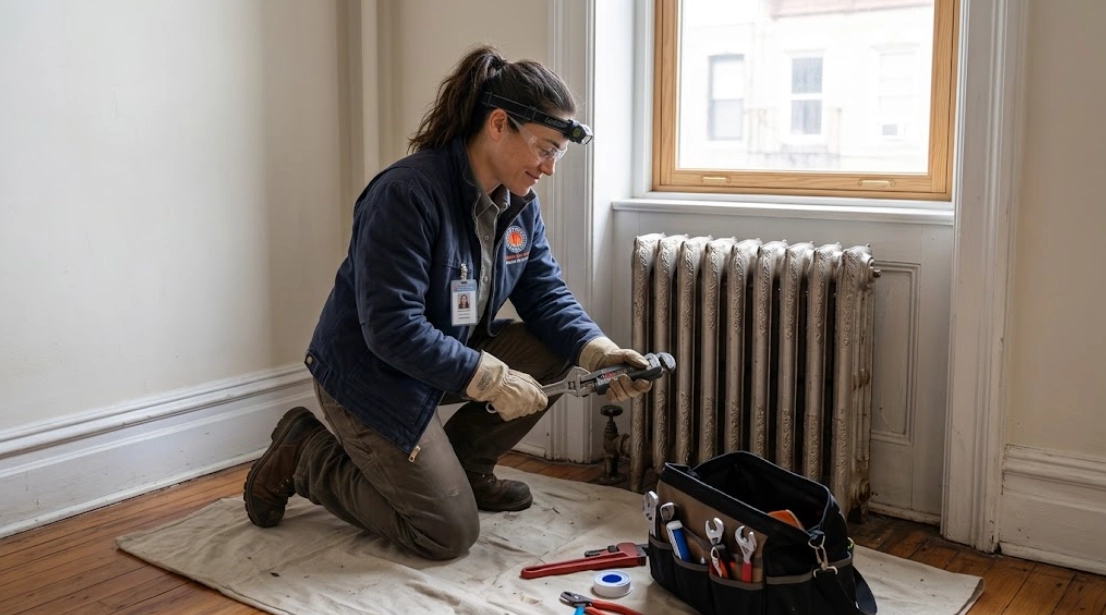
How Steam Radiator Systems Operate
Understanding the physics of steam distribution is essential to diagnosing chronic heating complaints accurately.
Gravity Condensate Drainage
In a single-pipe steam setup, a single pipe serves as both the steam supply and the condensate drain. Steam rushes upward into the radiator, gives off its latent heat to warm the room, and condenses into liquid water. The radiator must pitch slightly back toward the supply valve (approximately 1/4 inch per foot) so water drains by gravity against incoming steam without pooling.
Thermostatic Air Venting
When a heating cycle begins, the entire radiator is cold and full of room air. As steam enters, it pushes this air out through the thermostatic vent on the side of the radiator. When hot steam reaches the vent, an internal heat-sensitive capsule expands and seals the orifice shut. When the vent fails, steam escapes or air remains locked inside.
Low Operating Pressure
Residential steam systems in row houses and brownstones are designed to run at very low pressures, usually between 0.5 and 1.5 PSI. When pressure controls on the central boiler are set too high, steam violently forces its way past condensate, blowing out air vents and warping valve packings. This connects directly with central boiler repair in Van Cortlandt Village.
Radiator Valve Repair vs. Complete Replacement
When water leaks appear beneath a radiator, property owners often worry that the heavy cast-iron radiator itself has cracked. In reality, cast-iron radiators rarely fail; the leak is almost always located in the brass angle supply valve, the union nut, or the spud threaded into the radiator casting.
Minor Packing Nut Leaks: If water seeps from around the valve handle stem only when the system is actively heating, our technicians can frequently tighten or repack the valve stem with Teflon or graphite packing without removing the valve body.
Valve Body & Spud Replacement: If the valve handle is seized frozen, the internal brass gate has detached, or the brass seat is eroded, we replace the entire valve with a heavy-duty, commercial-grade steam valve. This involves carefully unthreading the antique radiator spud without cracking the cast-iron tapping.
If your heating system is accompanied by domestic hot-water issues, explore our water heater repair services, or review overall system replacement options on our boiler replacement page.
Preventive Steam Heat Maintenance Tips
Taking simple seasonal precautions helps keep steam radiators operating efficiently throughout freezing Bronx winters:
- Keep Valves Fully Open: Never attempt to throttle or regulate room temperature by turning a single-pipe radiator valve halfway. Keep it 100% open or 100% closed.
- Verify Radiator Pitch: Check that your radiator pitches downward toward the valve side. If flooring has settled over time, place sturdy wooden or composite shims under the feet opposite the valve.
- Keep Air Vents Unobstructed: Avoid covering vents with furniture, drapes, or thick radiator decorative covers that trap heat around the vent capsule prematurely.
- Inspect for Floor Stains: Check wooden floorboards beneath valves at the start of each heating season to catch minor valve packing drips before wood rots.
- Seasonal Boiler Flushes: Ensure your central steam boiler low-water cutoff is flushed regularly to prevent boiler surging and wet steam delivery.
Frequently Asked Questions About Radiator Repair
Practical answers to common steam radiator and pipe hammer questions in Van Cortlandt Village.
Why is my steam radiator cold while other rooms are hot?
The most frequent cause is a clogged or failed radiator air vent. In single-pipe steam systems, air inside the radiator must escape through the vent before steam can enter. If mineral scale or corroded internal floats hold the vent shut, cold air stays trapped, completely blocking steam entry. A partially closed supply valve or improper pitch can also cause cold radiators.
What causes violent banging and clanging noises in steam pipes?
Banging pipes—known as steam water hammer—occur when steam collides with pools of condensed water trapped inside pipes. This typically happens when a radiator sags out of level and cannot drain condensate back toward the supply riser, when supply valves are left partially open rather than fully open, or when boiler steam pressure is set excessively high.
Can a leaking radiator valve be repaired without replacing the radiator?
Yes. Most leaks around the valve stem can be resolved by tightening or repacking the valve stem packing nut with Teflon or graphite packing. If the brass valve body or internal seat is badly scored, replacing the radiator valve and union spud restores leak-free performance without replacing the cast-iron radiator itself.
Why does my radiator spit water or hiss continuously?
Sputtering water and continuous hissing indicate a defective air vent that cannot seal when steam or condensate reaches it. It may also indicate severe boiler water surging, high system operating pressure, or a radiator tilted backward away from the drain line.
Should steam radiator valves be partially closed to reduce heat?
No. In single-pipe steam systems, radiator supply valves must always be either completely open or completely closed. Partially closing the valve restricts the drainage of returning condensate, creating severe water hammer, valve leaks, and loud knocking.